Category: Uncategorized

  • Unity or Uniformity? A Veteran’s Honest Take on the State of Our Community

    Unity or Uniformity? A Veteran’s Honest Take on the State of Our Community

    SEO Title Tag: Unity or Uniformity? A Veteran’s Perspective on the Black Community
    SEO Meta Description: Is true unity possible? Explore an honest, provocative discussion on leadership, economic power, and faith through the lens of Christian Veterans of Color.

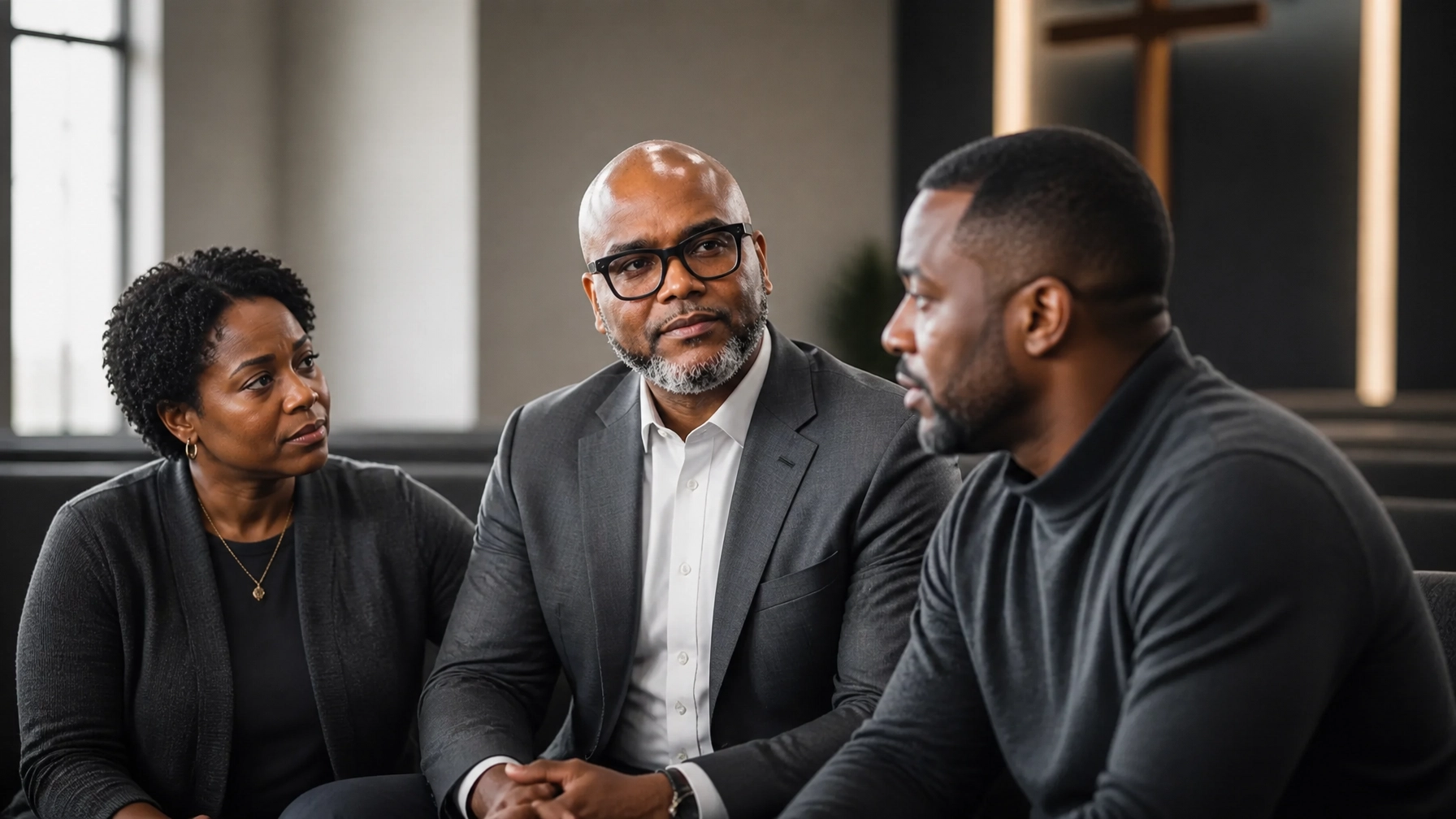
    A small group of Black veterans and veterans of color standing together in conversation outside a modern church and community space, reflecting community, military leadership, and faith-based unity in grayscale tones with subtle gold accents.

    The assumption that unity is a natural byproduct of shared struggle is a fallacy that has hindered our progress for decades. We often mistake the outward appearance of cooperation for a deep-seated alignment of values. As veterans, we have been trained to function within the rigid structures of a uniform, but we know better than anyone that wearing the same camouflage does not mean we share the same heart.

    In a recent episode of the Urban Christian Veterans podcast, Dr. Rose sat down with Greg (Retired Army) and Reggie (Retired First Sergeant) to dissect a question that many are afraid to voice: Is unity in the Black community even possible?

    The Leadership Vacuum: Selected vs. Elected

    We are currently navigating a significant "cultural disconnect" regarding leadership. In the era of Malcolm X and Dr. King, leaders were galvanized by the organic needs of the people. Today, we often face "manufactured spokespeople." There is a distinct difference between being elected by your community and being selected by a power structure.

    "Before you're elected, you're selected," Greg noted, referencing the machinery behind political ascensions. We often see "famous" individuals: musicians, athletes, or actors: being pushed forward as the voice of our community simply because of their platform. This is a form of tokenism that serves the interests of the status quo rather than the mission of the people. When leadership is a product of a PR campaign rather than a calling, the result is a "moral injury" to the collective spirit of the community.

    Two Black veterans mentoring a younger service member around a table in a community setting, reflecting military leadership, wisdom, and shared responsibility in grayscale tones with subtle gold accents.

    Urban Neo-Tribalism and the Diaspora

    When we speak of "Urban neo-tribalism," we are referring to the modern tribes we build around identity, culture, and faith within the complexities of city life. However, this tribalism can also be a barrier.

    Consider the African diaspora. While Pan-Africanism is a noble concept, the reality is often complicated by colonial borders and deep-seated tribal identities. A veteran of the Igbo tribe in Nigeria may feel a profound unity with his kin but a total disconnect from a Black veteran in Chicago. To the outside world, we are a monolith: seen simply as "Black." But internally, we are a mosaic of distinct cultures and histories. True unity requires us to acknowledge these nuances rather than forcing a shallow uniformity.

    The Reparations Thought Experiment: Real Assets, Not Slogans

    Discussions on reparations are often reduced to inflammatory headlines, but from a veteran’s perspective, we must look at the "psychosomatic response" to long-term systemic exclusion. We need to move beyond slogans to a serious analysis of real assets.

    Imagine a "Reparations Thought Experiment" where we account for the Social Security contributions, the 401ks, the inventions, and the cultural artifacts that were systematically stripped from our lineage. If we were to calculate the return of the gold, diamonds, and resources extracted through colonization, the conversation shifts from "charity" to "accounting." It is about the restoration of what was earned through sweat and sacrifice.

    Economic Leverage: The Power of the Boycott

    We often underestimate our collective economic power. The recent impact of boycotts on major retailers like Target proves that our dollar is a weapon of peace.

    There is a historical debate regarding "Integration vs. Separation." Dr. King himself once expressed a haunting concern: "I'm afraid that I'm integrating our people into a burning house." Before integration, the Black dollar circulated within Black hotels, grocers, and businesses. Integration, while necessary for civil rights, inadvertently disrupted that economic circulation. Today, cities like Atlanta boast a GDP that rivals entire states. The challenge now is to harness that economic engine with the same discipline we learned in the military.

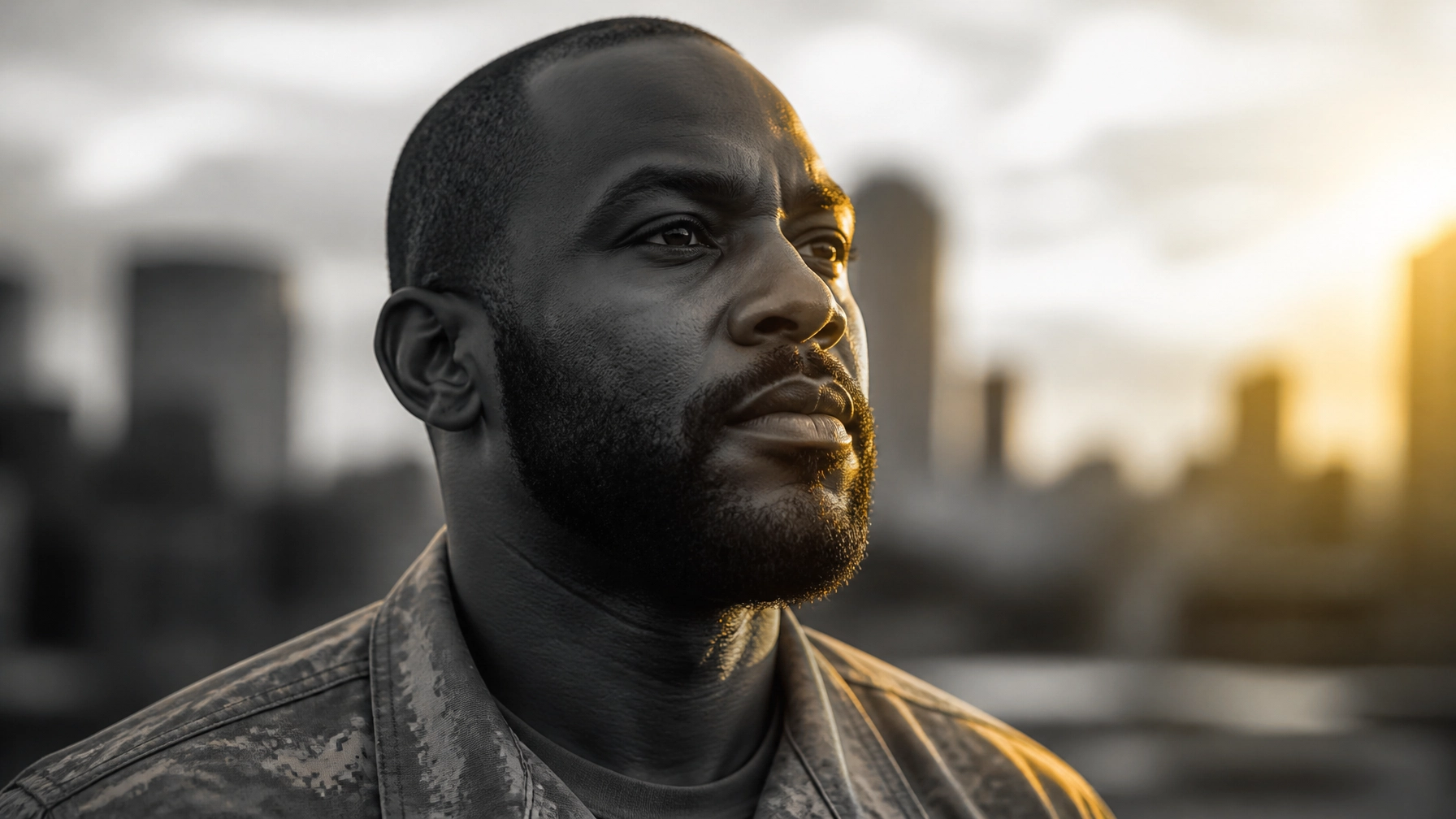
    A stylized representation of economic power: a silhouette of a veteran standing before a glowing, gold-accented map of a major city. The image is in grayscale, emphasizing the contrast between the person and the vast urban landscape.

    Unity vs. Uniformity: The Military Lesson

    The military provides a masterclass in the difference between unity and uniformity. Uniformity is easy: you put on the gear, you stand in the formation. Unity is difficult. It requires a shared mission and a shared sacrifice.

    In the unit, you may not like the person standing next to you. You may come from different "tribes" and hold different political views. But when the mission is on the line, you are family. You are unified by purpose. In our civilian communities, we have lost that sense of shared mission. We have traded the grit of unity for the aesthetics of uniformity.

    A diverse group of soldiers in identical uniforms standing together in formation, with individual expressions and subtle personal details that reflect both distinct identity and shared commitment to the mission.

    The Biblical Perspective: The Broken Peace

    Dr. Rose offers a sobering conclusion to this discussion: True, total unity may not be possible until the return of Christ. From the Garden of Eden, the unity between man and God, and man and man, was fractured. Throughout history, even the greatest movements have faced internal strife: Malcolm and Martin had their differences, and even the most successful military units have internal conflicts.

    The Bible warns us that in the end days, nations will rise against nations and kingdoms against kingdoms. While we must work toward peace and community, we must also recognize that our ultimate hope is not in a human leader or a political movement, but in a spiritual restoration.

    Veterans of color standing together in a circle of prayer and conversation inside a church fellowship hall, representing faith-based unity, healing, and community support in grayscale tones with subtle gold accents.

    A Call to Wisdom

    Seeking unity is an act of strength, but seeking it without discernment is a display of weakness. We must be wise in who we follow and clear in what we value. Prepare yourselves, educate your families, and ground your identity in your faith and your service.

    We invite you to join this honest and sometimes difficult conversation. Visit us at urbanchristianvets.com to share your perspective, find peer support, and connect with a community that understands the unique intersection of race, faith, and service.

    For more on navigating these complex identities, check out our recent discussions on Veterans of Color Navigating Faith and Service and Faith and Fortitude with Retired First Sergeant Reginald Adams.

    About Urban Christian Veterans: Urban Christian Veterans is a faith-centered podcast and community created for Christian Veterans of Color and the people who stand with them. We exist to make room for honest conversations about race, service, healing, leadership, and the sustaining power of faith. Join the conversation at urbanchristianvets.com.

  • Veteran Transition to Civilian Life: 7 Mistakes You’re Making (and How to Fix Them)

    Veteran Transition to Civilian Life: 7 Mistakes You’re Making (and How to Fix Them)

    Leaving active duty does not end your mission. It changes the operating environment. The veteran transition to civilian life is not a simple exchange of uniforms for business clothing. It is an identity shift, a benefits process, a cultural adjustment, and, especially for Christian Veterans of Color, a daily negotiation between race, faith, service, family, and work.

    That is why many capable veterans struggle after separation. Not because they lack discipline. Not because they are weak. Often, they are following transition habits that worked in uniform but fail in civilian life.

    Use this as your Monday-morning checklist.

    1. You are trying to white-knuckle the identity shift alone

    The first mistake is believing that a strong veteran should be able to figure everything out privately.

    That belief is understandable. Military culture rewards composure, self-control, and mission completion. But civilian transition is not a solo land navigation exercise. Your rank, unit, schedule, authority, and daily language may all change at once. Your family may also be adjusting to a new version of you.

    The result can be a cultural disconnect. You may still feel responsible for everyone while no longer knowing where you belong.

    Fix it Monday morning

    Tell three trusted people that you are in transition. Be specific about what you need:

    • A mentor who understands civilian employment.
    • A family member who can observe changes in your mood and routine.
    • A veteran, pastor, chaplain, or counselor who understands service-related identity loss.

    You are not surrendering independence. You are building a transition team.

    The Urban Christian Veterans podcast exists for this reason. Veterans of Color need honest conversations about service, race, faith, health, and belonging, not polished stories that leave out the difficult parts.

    2. You are treating the DD-214 as the finish line instead of the starting gun

    Your DD-214 is important. It verifies your service, character of discharge, and separation information. But receiving it does not mean the transition is complete.

    It means the next phase is officially beginning.

    Two veterans of color reviewing a DD-214, medical records, and a transition checklist at a table

    A missing award, incorrect service date, or inaccurate separation detail can create unnecessary complications with employment, education, health care, and VA claims. Your records are not merely administrative paperwork. They are part of the foundation for your civilian life.

    Fix it Monday morning

    Create one secure transition file, digital and paper, and organize:

    • Your finalized DD-214.
    • Service treatment and personnel records.
    • Separation health assessment.
    • Training certificates and evaluations.
    • Civilian medical records.
    • Copies of submitted VA forms and decisions.

    If you are still on active duty, start Transition Assistance Program preparation early. VA recommends beginning transition support well before separation, not during the final rush.

    Your DD-214 is not a conclusion. It is a launch document.

    3. You are ignoring racial bias and microaggressions in civilian workplaces

    Some transition advice tells veterans to “learn the civilian culture” as if every workplace is neutral. It is not.

    Christian Veterans of Color may face two separate adjustments at the same time. First, civilian employers may misunderstand military experience. Second, racial bias may influence who is considered “leadership material,” who is described as “aggressive,” and who receives the benefit of the doubt.

    Microaggressions may appear as repeated mispronunciation of your name, assumptions about your education, surprise at your accomplishments, exclusion from informal networks, or pressure to make your communication more comfortable for others. These experiences can be particularly disorienting after serving in an institution where your competence was supposed to be evaluated through standards and performance.

    This does not mean every difficult interaction is discrimination. It does mean you should not dismiss a pattern simply because you are trying to be agreeable.

    Fix it Monday morning

    Translate your military skills into civilian language, but do not erase your identity.

    Then:

    • Document concerning incidents with dates, witnesses, and details.
    • Identify HR, equal employment, or ethics procedures.
    • Find a mentor or professional network that understands race and veteran status.
    • Ask direct questions about promotion criteria, reporting structures, and workplace expectations.
    • Protect your mental and spiritual health if the environment becomes hostile.

    You have already adapted to demanding systems. You do not have to pretend that an unhealthy system is acceptable.

    4. You are letting the “I’m fine” reflex block faith and peer support

    “I’m fine” may be the most expensive sentence in a veteran’s transition.

    It often sounds like strength. Sometimes it is a reflex designed to keep the mission moving. But when it blocks honest conversation, it prevents the right kind of care from reaching you.

    It is also important to distinguish PTSD from moral injury. PTSD is a clinical injury often associated with fear, threat, intrusive memories, avoidance, and hyperarousal. Moral injury is different. It is a spiritual and ethical wound connected to guilt, shame, betrayal, loss of meaning, or conflict with deeply held beliefs. The two can overlap, but they are not identical.

    A veteran may need trauma treatment, pastoral care, or both.

    Fix it Monday morning

    Replace “I’m fine” with one accurate sentence:

    • “I am sleeping poorly.”
    • “I am angry more often than usual.”
    • “I do not know what I believe right now.”
    • “I feel guilty about what happened.”
    • “I need help finding a counselor.”
    • “I am functioning at work, but I am not at peace.”

    A VA mental health provider can assess clinical concerns. A trusted pastor, chaplain, or Christian counselor can help address spiritual distress. Prayer is not a substitute for treatment, and treatment does not make faith irrelevant.

    The soul is part of the whole person.

    5. You are leaving VA benefits and disability claims on the table

    Many veterans delay benefits because they assume filing is burdensome, embarrassing, or reserved for someone “worse off.” That assumption can cost you health care, compensation, education support, housing assistance, or employment resources.

    If you have a service-connected condition, VA’s Benefits Delivery at Discharge program may allow you to file between 180 and 90 days before separation. If you have less than 90 days remaining, you may still be able to file a standard pre-discharge claim.

    Do not diagnose yourself out of eligibility. Document your actual condition and its effect on your life.

    Fix it Monday morning

    • Review your medical and service records.
    • List recurring physical, psychological, and sleep-related symptoms.
    • Attend every scheduled VA examination.
    • Track deadlines and correspondence.
    • Ask about health care, disability compensation, education, housing, and Veteran Readiness and Employment benefits.
    • Work with a verified, VA-accredited representative or VSO.

    VA-recognized VSO services are free. Be cautious with unaccredited consultants who promise guaranteed ratings or charge improper fees. If VA denies a claim, do not assume the matter is over. An accredited representative can explain decision reviews, supplemental claims, higher-level reviews, and appeals.

    Preparation is not manipulation. It is stewardship.

    6. You are losing the battle-buddy structure without building a replacement tribe

    Military service gives you an organized social system. You know who checks on you, who shares the workload, and who understands the shorthand.

    Civilian life often removes that structure overnight.

    The replacement does not happen automatically. You have to build it.

    For a Christian Veteran of Color, a congregation can become the natural replacement tribe, but only if the church is willing to understand the veteran’s experience. A veteran ministry should be more than a patriotic recognition ceremony once a year. It should offer consistent relationship, practical help, prayer, family support, and room for difficult questions.

    This is also where the idea of urban neo-tribalism matters. Urban neo-tribalism describes modern tribes built around identity, culture, and faith in city life. From a Veteran of Color’s perspective, it means finding people who understand the intersection of Black identity, military service, Christian belief, family responsibility, and civilian pressure.

    Christian veterans of color meeting in an urban church fellowship room for mentoring and peer support

    Fix it Monday morning

    Choose two communities and attend consistently for 90 days:

    • A local church or veteran ministry.
    • A VSO, peer group, professional association, or Urban Christian Veterans conversation.

    Do not wait for people to discover that you need connection. Put recurring contact on the calendar. Call one battle buddy. Invite one trusted church member to coffee. Ask your congregation whether it has practical support for veterans and military families.

    Belonging is built through repetition.

    7. You are choosing a paycheck over a calling without counting the cost

    A paycheck matters. Housing, food, health care, and family obligations are real. No responsible person should romanticize financial instability.

    But there is a difference between taking a necessary job and allowing a temporary job to become a permanent surrender of your values.

    The mistake is accepting work solely because it is available, familiar, or connected to your military background, without asking whether the environment, growth path, and mission are sustainable. Veterans often pursue security while ignoring the psychosomatic response of living against their convictions: chronic tension, exhaustion, resentment, and loss of spiritual energy.

    Your calling may not look like your military mission. It may involve education, health care, ministry, public service, business, skilled work, or mentoring younger people. The question is not, “How do I recreate my old rank?” It is, “Where can my discipline, experience, faith, and compassion serve people well now?”

    Dr. Dennis A. Rose Jr.’s book, From the Battlefield to Belonging, speaks directly to this movement from military experience toward faith, purpose, and community.

    From the Battlefield to Belonging by Dr. Dennis A. Rose Jr., a ministry guide for reconnecting veterans to faith, purpose, and community

    Fix it Monday morning

    Write down three possible career directions and evaluate each by:

    • Financial stability.
    • Physical and emotional sustainability.
    • Opportunity for growth.
    • Alignment with your faith and values.
    • Service to your family and community.
    • The kind of person the work is shaping you to become.

    You may need a bridge job. That is not failure. Just do not confuse the bridge with the destination.

    The Monday-morning transition checklist

    Before the week ends, complete these seven actions:

    1. Tell three trusted people what this transition is really like.
    2. Secure and review your DD-214 and records.
    3. Identify workplace bias resources and a professional mentor.
    4. Replace “I’m fine” with one honest statement.
    5. Contact a VA-accredited representative or VSO.
    6. Join a church, veteran group, or peer community consistently.
    7. Evaluate your job path against your calling, health, and values.

    The veteran transition to civilian life requires more than a resume. It requires preparation, truth, community, and wisdom.

    You do not have to make this transition alone. Join the conversation, hear honest stories from Christian Veterans of Color, and connect with a community that understands race, faith, service, and the work of rebuilding peace at Urban Christian Veterans.

    SEO Title Tag: Veteran Transition to Civilian Life: 7 Mistakes and Fixes

    SEO Meta Description: Leaving active duty? Learn 7 common veteran transition to civilian life mistakes involving identity, VA benefits, workplace bias, church support, peer connection, and calling.

  • VA Benefits Help: A Practical Guide for Veterans of Color Claiming What You’ve Earned

    VA Benefits Help: A Practical Guide for Veterans of Color Claiming What You’ve Earned

    SEO Title Tag: VA Benefits Help for Veterans of Color: Filing and Appeals Guide

    SEO Meta Description: Learn how veterans of color can claim VA benefits, find free accredited help, appeal denials, and approach benefits as stewardship and strength.

    A VA denial is not the same as a fair decision. For veterans of color, the claims process has produced documented racial disparities. You should not assume that confusion, missing records, or an initial denial means you are disqualified.

    You earned the right to be heard.

    This guide provides practical VA benefits help for Christian veterans of color, their families, and service members preparing for the transition to civilian life. It is not legal advice. VA rules and deadlines can change, so verify your situation with an accredited representative.

    Why This Conversation Matters

    The history is not new.

    After World War I and World War II, Black veterans returned home after defending a democracy that often denied them equal access to housing, education, employment, and medical care. The GI Bill was written as a federal benefit, but local systems frequently administered it through segregated institutions, discriminatory lending practices, and unequal access. A benefit can exist on paper and still be difficult to obtain in practice.

    That history should inform how we understand today’s claims process.

    A 2023 Government Accountability Office report examined VA disability compensation decisions from fiscal years 2010 through 2020. VA approved 61% of initial claims from Black veterans compared with 75% of claims from White veterans. That is a 14-point difference.

    For Black male veterans, the gaps were especially significant in certain conditions. GAO found that VA approved initial post-traumatic stress disorder claims at a lower rate for Black male veterans than for White male veterans. Hearing loss showed an even wider difference.

    These figures do not prove that every individual denial was unlawful or incorrect. They do establish that veterans of color should approach the process with preparation, documentation, and qualified support.

    Do not navigate a complicated system alone.

    Older Black veteran organizing service records and medical documents

    Step 1: Identify the Benefit You Are Seeking

    “VA benefits” is a broad term. Begin by identifying the specific benefit connected to your needs.

    Common benefits include:

    • VA disability compensation for injuries or illnesses connected to military service
    • VA health care, including physical health, mental health, and specialty care
    • Education and training benefits
    • VA home loan programs
    • Veteran pension benefits for some veterans with limited income and qualifying service
    • Survivor benefits for eligible spouses, children, or dependents
    • Caregiver and adaptive housing support in qualifying circumstances

    For many veterans, disability compensation is the starting point. VA generally looks for evidence of three things:

    1. A current medical condition or disability.
    2. An event, injury, illness, exposure, or circumstance connected to military service.
    3. A relationship between the current condition and that service. This is often called a medical nexus.

    The condition does not always need to have been fully diagnosed while you were on active duty. Symptoms may appear later. A psychosomatic response, chronic pain, hearing loss, sleep disruption, depression, anxiety, or PTSD may become more visible after separation.

    That is why medical documentation matters.

    Step 2: Build Your Evidence Before You File

    A strong claim tells a clear story. It connects your service history to your present condition.

    Gather:

    • Service treatment records
    • Personnel records
    • Deployment or duty assignment records
    • Private medical records
    • VA medical records
    • Medication lists
    • Imaging, laboratory, or diagnostic reports
    • Statements from family members
    • Statements from fellow service members
    • Employment records showing how the condition affects your work
    • A personal statement describing onset, symptoms, treatment, and daily limitations

    Do not exaggerate. Do not minimize.

    Many veterans were trained to endure pain, remain mission-focused, and avoid appearing vulnerable. That discipline may have helped you survive military service. It can also make it difficult to describe what happened afterward.

    Explain how the condition affects ordinary life. Describe sleep, concentration, relationships, mobility, work, spiritual life, and family responsibilities. If racial bias, cultural disconnect, moral injury, or combat experiences affected your mental health, describe those experiences plainly.

    Your faith is not separate from your health. For many Christian veterans, the soul, belief system, body, and community are connected. You may experience distress through prayer, worship, trust, anger, isolation, or difficulty understanding what you witnessed. These realities can be relevant to your overall health picture.

    Step 3: Get Free, Accredited VA Benefits Help

    You do not have to pay a private company to begin seeking assistance.

    A Veterans Service Organization, commonly called a VSO, may help you prepare and file a claim or appeal at no cost. Examples include national organizations, state and county veterans offices, and other VA-recognized organizations.

    Use the VA’s official accredited representative search to verify that the person helping you is accredited. You can also review VA’s guidance on getting help from an accredited representative.

    An accredited VSO representative can help you:

    • Review the reasons for a denial
    • Identify missing evidence
    • Organize service and medical records
    • Explain the difference between service connection and disability rating
    • Prepare forms and statements
    • Select an appropriate appeal option
    • Communicate with VA
    • Represent you before the Board of Veterans’ Appeals when authorized

    Trust matters. GAO interviews with VSOs identified lack of awareness, missing records, discomfort with organizations, and concerns about representation as roadblocks for veterans from historically disadvantaged racial and ethnic groups.

    If a representative dismisses your experience, minimizes your symptoms, or discourages you from filing without carefully reviewing your evidence, seek a second opinion.

    Black veteran meeting with an accredited representative to review a claim folder

    Step 4: File the Claim Carefully

    You can file a disability compensation claim online, by mail, or in person. Begin with the VA’s official disability compensation filing instructions.

    Before submitting:

    • Make sure every claimed condition is clearly identified.
    • Use consistent dates and descriptions.
    • Attach relevant evidence when available.
    • Keep a complete copy of everything you submit.
    • Save confirmation numbers and upload receipts.
    • Record the date of filing.
    • Read every VA letter carefully.

    If you are still collecting evidence, an intent to file may help preserve a potential effective date. Ask an accredited representative whether that step is appropriate for you.

    Do not send original documents unless VA specifically requires them. Maintain a personal benefits file, either physical or digital. A family member or trusted church leader may help you keep it organized.

    Preparation is not paranoia. It is stewardship.

    Step 5: Understand Your Appeal Options

    A denial is a decision. It is not the end of the process.

    When VA denies a claim, grants a rating that seems too low, or assigns an incorrect effective date, read the decision letter closely. The letter should explain the evidence considered and the reason for the decision.

    Most veterans generally have one year from the date of the decision letter to request review. Do not rely on memory. Confirm the deadline printed on your decision and discuss it promptly with an accredited representative.

    The main review options are:

    Higher-Level Review

    A more senior VA reviewer examines the existing evidence. You generally cannot submit new evidence in this lane. This option may be appropriate when you believe VA overlooked evidence or misapplied the law.

    Supplemental Claim

    You submit new and relevant evidence. This may include a medical opinion, service record, treatment note, personal statement, or witness statement that was not previously considered.

    Board of Veterans’ Appeals

    You ask the Board to review the decision. Depending on your circumstances, you may choose direct review, evidence submission, or a hearing. Board appeals can be more formal and may take longer, but they are important for complex or strongly disputed claims.

    Do not choose an appeal lane simply because it sounds faster. Choose the lane that matches the weakness in the decision.

    Black veteran couple preparing an appeal packet together at home

    If You Believe You Were Treated Unfairly

    Document possible discrimination or unequal treatment.

    Write down:

    • Dates and locations
    • Names and titles
    • What was said
    • Who was present
    • What evidence was ignored
    • How the interaction affected your care or claim

    Patient advocates and minority veteran coordinators may help address concerns within VA health care facilities. These resources do not replace a formal claim or appeal, but they can help you raise communication and treatment concerns.

    Continue using the formal appeal process. A complaint about treatment does not automatically reverse a benefits decision.

    Seeking Benefits Is an Act of Strength

    Some veterans hesitate to apply because they do not want to appear dependent. Others were raised to believe that asking for help is a weakness. That belief deserves correction.

    VA benefits are not charity. They are part of the nation’s obligation to those who served. Disability compensation is designed to recognize the impact of service-connected conditions. Health care is a means of preserving life and function. Education, housing, and family benefits can support stability after service.

    Christian stewardship means using what has been entrusted to you wisely. That includes your health, your family’s future, your earned benefits, and your ability to serve others without destroying yourself.

    You do not honor your service by refusing care.

    You honor it by preserving the life you were given.

    A Practical Starting Checklist

    This week, take these actions:

    1. Locate your most recent VA decision letter.
    2. Write down every deadline.
    3. Create a benefits folder.
    4. Gather service and medical records.
    5. List every condition affecting your daily life.
    6. Contact an accredited VSO or representative.
    7. Ask what evidence is missing.
    8. Choose a filing or appeal strategy.
    9. Keep copies of every submission.
    10. Tell one trusted person what you are doing.

    The veteran transition to civilian life is not complete when the uniform comes off. It continues as you rebuild health, purpose, family stability, and peace.

    Seek help early. Ask careful questions. Appeal when the evidence supports an appeal. Let wisdom: not shame: direct your next step.

    Join the conversation with Christian veterans of color at Urban Christian Veterans. You are not the only one navigating race, faith, military service, health, and transition. Your experience may help another veteran claim what they have earned.

  • 5 Ways Your Church Can Actually Support Veterans of Color (Beyond the Welcome Banner)

    5 Ways Your Church Can Actually Support Veterans of Color (Beyond the Welcome Banner)

    SEO Title Tag: How Can Churches Support Veterans of Color? 5 Practical Ways

    SEO Meta Description: Learn how churches can support veterans of color through listening circles, PTSD and moral injury care, VA benefits help, health education, and racial honesty.

    A Veterans Day acknowledgment is meaningful. A welcome banner is courteous. Neither is the same as sustained care.

    If your church wants to know how can churches support veterans, the answer begins with a correction: veterans do not need to be treated as symbols of patriotism. They need to be recognized as whole people carrying memories, responsibilities, injuries, questions, and faith journeys that did not end when they left the uniform.

    This is especially true for Christian Veterans of Color.

    Many have served a nation that did not always protect them from racial bias. They may have defended democratic ideals while confronting discrimination in their units, at work, in housing, in health care, or within other institutions. They may return home and discover that the church welcomes “veterans” in general but does not understand the specific experience of being Black, Latino, Asian American, Indigenous, or another Veteran of Color.

    Historically, churches have often served as places of refuge, organizing, education, mutual aid, and moral witness. That responsibility continues today.

    Real church support veterans can trust must move from public appreciation to private presence. Here are five ways to begin.

    1. Listen before you build a veterans ministry

    Many churches begin with a program. They order a banner, schedule a luncheon, and invite veterans to attend. The better starting point is listening.

    Ask veterans and their families:

    • What kind of support would be useful?
    • What has made church feel safe or unsafe?
    • What do pastors and ministry leaders misunderstand?
    • Would veterans prefer a group for all veterans, a group specifically for Veterans of Color, or both?
    • What support do spouses, children, and caregivers need?

    A listening circle can be simple. Meet monthly in a private room. Establish confidentiality. Do not require anyone to describe combat, trauma, or military service. Let participants speak about transition, family strain, health, employment, faith, or daily life.

    The purpose is not to collect dramatic stories. It is to understand real needs.

    A veteran sitting quietly in the pew may be managing hypervigilance, grief, chronic pain, insomnia, or a psychosomatic response to stress. Another may be carefully deciding whether church leaders will believe him when he describes racial bias. A spouse may be carrying the practical burden of appointments, finances, and emotional care.

    The church must learn to see what is not announced.

    Veterans of color participating in a confidential church listening circle

    Urban Christian Veterans has created space for these conversations through its work with Christian Veterans of Color. Churches can learn from those lived experiences by inviting veterans to shape the ministry rather than designing services for them without them.

    Support begins with humility.

    2. Train leaders to recognize PTSD and moral injury in the pew

    Not every struggling veteran has PTSD. Not every veteran with PTSD will speak about it. Symptoms may appear as irritability, isolation, difficulty trusting others, sleep problems, emotional numbness, anger, substance use, or a constant need to sit where every entrance is visible.

    These behaviors are not always rebellion or spiritual failure.

    They may be attempts to remain safe.

    Moral injury is another concern. The U.S. Department of Veterans Affairs explains moral injury as distress connected to witnessing, participating in, or failing to prevent actions that violate deeply held moral or spiritual beliefs. It can involve guilt, shame, grief, self-condemnation, anger, withdrawal, and a damaged sense of identity.

    Moral injury is not simply “feeling bad about the past.” It can affect a person’s relationship with God, family, community, and self.

    A veteran may still believe in God while feeling abandoned by God. He may pray faithfully while believing he is beyond forgiveness. She may attend worship while feeling separated from the congregation by experiences no one seems prepared to hear.

    Pastors and lay leaders should receive basic training in:

    • PTSD and trauma responses.
    • Moral injury and spiritual distress.
    • Suicide prevention and crisis response.
    • Confidentiality and appropriate pastoral boundaries.
    • Racial trauma and cultural humility.
    • Referral practices for licensed mental health care.

    Prayer is powerful. Prayer is not a substitute for competent treatment.

    Churches should maintain a referral list that includes the VA, Vet Centers, licensed counselors, Christian therapists, crisis services, and culturally responsive providers. The VA’s Race, Culture, and PTSD resource also encourages Veterans to discuss cultural concerns with their providers and request care that feels respectful and appropriate.

    A pastor does not need to become a therapist. A pastor does need to know when a veteran requires more than pastoral conversation.

    3. Create peer-to-peer support for veterans and their families

    Veterans often speak more openly with people who understand military culture without requiring an explanation for every term, memory, or reaction.

    That is why peer-to-peer ministry matters.

    A church can identify trusted veterans of color to serve as ministry leaders, mentors, visitation partners, and advocates. These leaders should not be expected to provide professional counseling. Their role is to build trust, notice changes, offer companionship, and connect people to appropriate resources.

    A strong peer ministry might include:

    • A monthly veterans and families gathering.
    • One-to-one check-ins for newly separated service members.
    • Mentoring for veterans navigating civilian employment.
    • Family meals that include spouses and children.
    • Transportation to appointments or church events.
    • Support for older veterans who are isolated or homebound.
    • A quiet place during worship for anyone who becomes overwhelmed.
    • Conversations about faith after war, loss, and moral confusion.

    Churches should also honor veterans who do not want public recognition. Some prefer not to stand during a service or wear a military organization’s emblem. Participation must remain voluntary.

    This is not a public-relations ministry. It is a relationship ministry.

    For generations, communities of color have relied on trusted networks when formal institutions were unreliable. A peer ministry can continue that tradition while also acknowledging the complexity of military service, racial identity, and Christian faith.

    The veteran should not be reduced to a testimony. The family should not be treated as an accessory. Both deserve consistent care.

    4. Help with VA benefits and health needs

    Good intentions do not pay a medical bill, complete a disability claim, provide transportation, or explain a VA letter.

    Practical assistance is one of the clearest answers to the question, how can churches support veterans?

    A congregation can host a benefits navigation night with an accredited Veterans Service Officer. It can help veterans locate VA health care, understand eligibility, gather documents, and identify legitimate claims assistance. It can maintain an updated directory of local VA facilities, Vet Centers, housing resources, legal aid, employment services, and emergency support.

    Volunteers should never promise a specific benefits outcome or give legal advice outside their training. Their role is to help veterans reach qualified professionals.

    Health education also belongs in this ministry.

    The VA reports that prostate cancer is one of the most common cancer diagnoses in the Veteran community. Approximately 10,000 cases are diagnosed across the VA each year, and about one-third occur among Black Veterans. Black men should speak with a health care provider about prostate cancer screening earlier than many other men; the VA encourages Black men to begin that conversation around age 40.

    Churches can invite trusted clinicians, particularly clinicians who understand the communities they serve, to discuss:

    • Prostate cancer awareness and screening conversations.
    • Hypertension and diabetes.
    • Toxic exposure concerns.
    • Mental health and suicide prevention.
    • Sexual health and family communication.
    • Transportation and appointment support.

    Use reliable information from the VA’s Prostate Cancer and the Black Veteran Community resource. Do not turn a health event into fear-based messaging. Give people clear information, time to ask questions, and help taking the next step.

    Care for the body is not separate from care for the soul.

    A Black veteran and church volunteer reviewing benefits and healthcare paperwork

    5. Address racial bias honestly and let Veterans of Color lead

    A church cannot support Veterans of Color while refusing to discuss race.

    Some Veterans of Color have experienced racial slurs, unequal discipline, exclusion from leadership, suspicion from law enforcement, or the assumption that they were support personnel rather than senior service members. Others have encountered bias after discharge when seeking employment, housing, medical care, or benefits.

    These experiences can shape whether a veteran trusts church leadership.

    A congregation does not need to defend every institution associated with military service. It needs to listen truthfully and respond with moral courage.

    That may include:

    • Teaching openly about race, service, and American history.
    • Examining whether Veterans of Color are represented in ministry leadership.
    • Asking whether worship language unintentionally glorifies war or silence.
    • Partnering with culturally responsive mental health providers.
    • Accompanying veterans to benefits, housing, or employment meetings.
    • Responding when a veteran reports discrimination.
    • Funding ministry work rather than relying only on volunteer labor.
    • Inviting Veterans of Color to make decisions, not simply share stories.

    The goal is not division. The goal is integrity.

    Christian unity does not require pretending that everyone has experienced the church, military, or nation in the same way. Unity becomes more credible when it can hold truth, repentance, justice, and reconciliation together.

    The church should be a place where a Veteran of Color does not have to choose between cultural dignity and spiritual belonging.

    A 60-day starting plan for your congregation

    Your church does not need to create a large organization immediately. Begin with disciplined action.

    Days 1–30: Listen and assess

    • Meet privately with veterans and family members.
    • Identify barriers in worship, scheduling, transportation, and communication.
    • Review confidentiality and crisis-response policies.
    • Map local VA, Vet Center, health, counseling, and benefits resources.
    • Ask Veterans of Color what leadership and representation should look like.

    Days 31–60: Train and begin

    • Form a diverse veteran ministry team.
    • Provide basic trauma, moral injury, suicide prevention, and cultural humility training.
    • Host one listening circle or benefits navigation event.
    • Establish a confidential referral process.
    • Gather feedback before expanding the program.

    Do not measure success by attendance alone. Measure whether people feel heard, whether families receive practical help, whether leaders follow through, and whether Veterans of Color are trusted to lead.

    A banner can announce welcome. Consistent action proves it.

    The question is not whether your church appreciates veterans. The question is whether veterans can experience your congregation as a place of truth, safety, healing, and belonging.

    That kind of church support veterans can trust requires courage. It requires preparation. It requires the willingness to hear difficult realities without abandoning hope.

    If you are a Christian Veteran of Color, a family member, church leader, or active-duty service member searching for honest conversation about faith, race, military service, health, and healing, join the conversation at Urban Christian Veterans. Your experience matters. Your questions matter. Your peace is worth protecting.

    Seeking help is not weakness.

    It is wisdom. It is stewardship. It is honor.

  • Moral Injury Secrets Revealed: What Your VA Doctor Might Not Be Telling You About Your Soul

    Moral Injury Secrets Revealed: What Your VA Doctor Might Not Be Telling You About Your Soul

    For decades, the standard narrative of military trauma has been centered almost exclusively on Post-Traumatic Stress Disorder (PTSD). We have been told that our nightmares, our hyper-vigilance, and our startled responses are purely the result of a biological fear response: a glitch in the nervous system’s fight-or-flight mechanism. However, this clinical focus misses a profound and often more devastating reality. For many of us, the weight we carry is not just a psychological reaction to danger; it is a spiritual crisis of conscience.

    The clinical world calls it a "psychosomatic response," but in our community, we know it by its true name: a soul wound. This is what we refer to as moral injury. While your VA doctor may be equipped to treat the symptoms of a triggered brain, they are often ill-prepared to address the fracture in your spirit.

    What is Moral Injury?

    To understand the depth of this struggle, we must first answer the fundamental question: what is moral injury? Unlike PTSD, which is rooted in fear and the threat of physical harm, moral injury veterans experience a deep psychological and spiritual wound that arises when war-related experiences violate their core moral beliefs. It is the lasting impact of witnessing, failing to prevent, or perpetrating acts that transgress deeply held moral values.

    In the clinical setting, moral injury is often treated as a subset of trauma, yet its core features are distinctly moral and ethical: intense shame, guilt, remorse, and a profound sense of betrayal. It is a damage done to one’s internal moral compass. When a soldier is forced to make a split-second decision that conflicts with their upbringing, their faith, or their humanity, the resulting internal conflict does not simply disappear with time or traditional therapy. It lingers as a persistent accusation against the self.

    The Soul Wound: Why the Clinical System Falls Short

    The Department of Veterans Affairs and the broader medical community have made strides in recognizing moral injury, yet they remain tethered to a secular framework. They view the individual as a biological machine to be recalibrated rather than a spiritual being in need of reconciliation. When a veteran of color speaks of feeling "unclean" or "abandoned by God," the clinical response is often to categorize these as "cognitive distortions."

    A veteran's hands holding a Bible and a military coin, symbolizing the intersection of faith and service.

    But for the Christian Veteran of Color, these are not mere distortions; they are spiritual realities. Our faith is not a peripheral hobby; it is the very bedrock of our identity. When we encounter faith and fortitude in the face of combat, we are engaging our souls. A soul wound requires "soul repair." It requires a vocabulary of sin, forgiveness, grace, and redemption: terms that are frequently absent from a standard therapeutic session.

    The Intersection of Race, Faith, and Service

    For veterans of color, the experience of moral injury is often compounded by a unique cultural disconnect. We often face a dual betrayal: the betrayal of the "moral right" during combat and the betrayal of the institutions we served when we encounter racial bias within the ranks.

    Imagine the psychological and spiritual toll of serving a nation with absolute loyalty while that same nation’s systems treat you with suspicion or disdain. This is a common theme in our discussions on navigating faith, service, and identity. When a veteran of color experiences a morally injurious event, it is often filtered through a lens of historical and systemic injustice. The question becomes: How can I reconcile my service to a system that doesn't always see my humanity?

    The moral injury is not just about what was done "over there." It is about the cultural disconnect we face "over here." When we return home, we often find ourselves in a society that lacks the spiritual infrastructure to help us carry our burdens. This is why many of us feel like strangers in our own land.

    Urban Neo-Tribalism: Finding Healing in Community

    Healing from a soul wound cannot be done in isolation. It requires what we call "Urban Neo-Tribalism." In the context of the veteran experience, this means building modern tribes centered around shared identity, culture, and faith within our city lives. We need a community that understands the specific pressures of being a Black or Brown veteran in a world that often demands we compartmentalize our experiences.

    A diverse group of veterans of color engaged in a supportive community conversation.

    True healing comes when we can speak the truth about our "soul wounds" without fear of judgment. It comes from unity in the community and from the wisdom of those who have walked the path before us. It involves rituals of lament, the seeking of divine forgiveness, and the rebuilding of a moral identity that incorporates our service without being defined by its darkest moments.

    Moving Toward Wisdom and Strength

    If you are a veteran struggling with the weight of your service, understand that your pain is a testament to your humanity. You are not "broken" in the biological sense; you are wounded in the spiritual sense. Seeking help is not a display of weakness; it is a display of strength and honor. It is an act of preparation for the next chapter of your life.

    The clinical path may offer you tools to manage your symptoms, but only a faith-centered approach can offer you peace for your soul. We must bridge the gap between "then" and "now," recognizing that our current struggles are part of a larger human narrative of sacrifice and redemption.

    A resilient female veteran in a suit looking out over a city, representing leadership and soul repair.

    Take control of your own healing. Do not wait for a system that was not built for you to provide the answers your soul is crying out for. Reconnect with your faith, find your tribe, and begin the work of moral repair. You have served your country; now it is time to serve your own spirit.

    Are you ready to address the wounds that go deeper than the skin? Join the conversation and find your tribe at urbanchristianvets.com. We are here to walk this path with you.


    SEO Title Tag: Moral Injury Veterans: Understanding the Soul Wounds of Service
    SEO Meta Description: Explore what moral injury in veterans really is. Learn why clinical treatments often miss the spiritual "soul wounds" and how veterans of color can find healing through faith and community.

  • Hello world!

    Welcome to WordPress. This is your first post. Edit or delete it, then start writing!