SEO Title Tag: How Can Churches Support Veterans of Color? 5 Practical Ways
SEO Meta Description: Learn how churches can support veterans of color through listening circles, PTSD and moral injury care, VA benefits help, health education, and racial honesty.
A Veterans Day acknowledgment is meaningful. A welcome banner is courteous. Neither is the same as sustained care.
If your church wants to know how can churches support veterans, the answer begins with a correction: veterans do not need to be treated as symbols of patriotism. They need to be recognized as whole people carrying memories, responsibilities, injuries, questions, and faith journeys that did not end when they left the uniform.
This is especially true for Christian Veterans of Color.
Many have served a nation that did not always protect them from racial bias. They may have defended democratic ideals while confronting discrimination in their units, at work, in housing, in health care, or within other institutions. They may return home and discover that the church welcomes “veterans” in general but does not understand the specific experience of being Black, Latino, Asian American, Indigenous, or another Veteran of Color.
Historically, churches have often served as places of refuge, organizing, education, mutual aid, and moral witness. That responsibility continues today.
Real church support veterans can trust must move from public appreciation to private presence. Here are five ways to begin.
1. Listen before you build a veterans ministry
Many churches begin with a program. They order a banner, schedule a luncheon, and invite veterans to attend. The better starting point is listening.
Ask veterans and their families:
- What kind of support would be useful?
- What has made church feel safe or unsafe?
- What do pastors and ministry leaders misunderstand?
- Would veterans prefer a group for all veterans, a group specifically for Veterans of Color, or both?
- What support do spouses, children, and caregivers need?
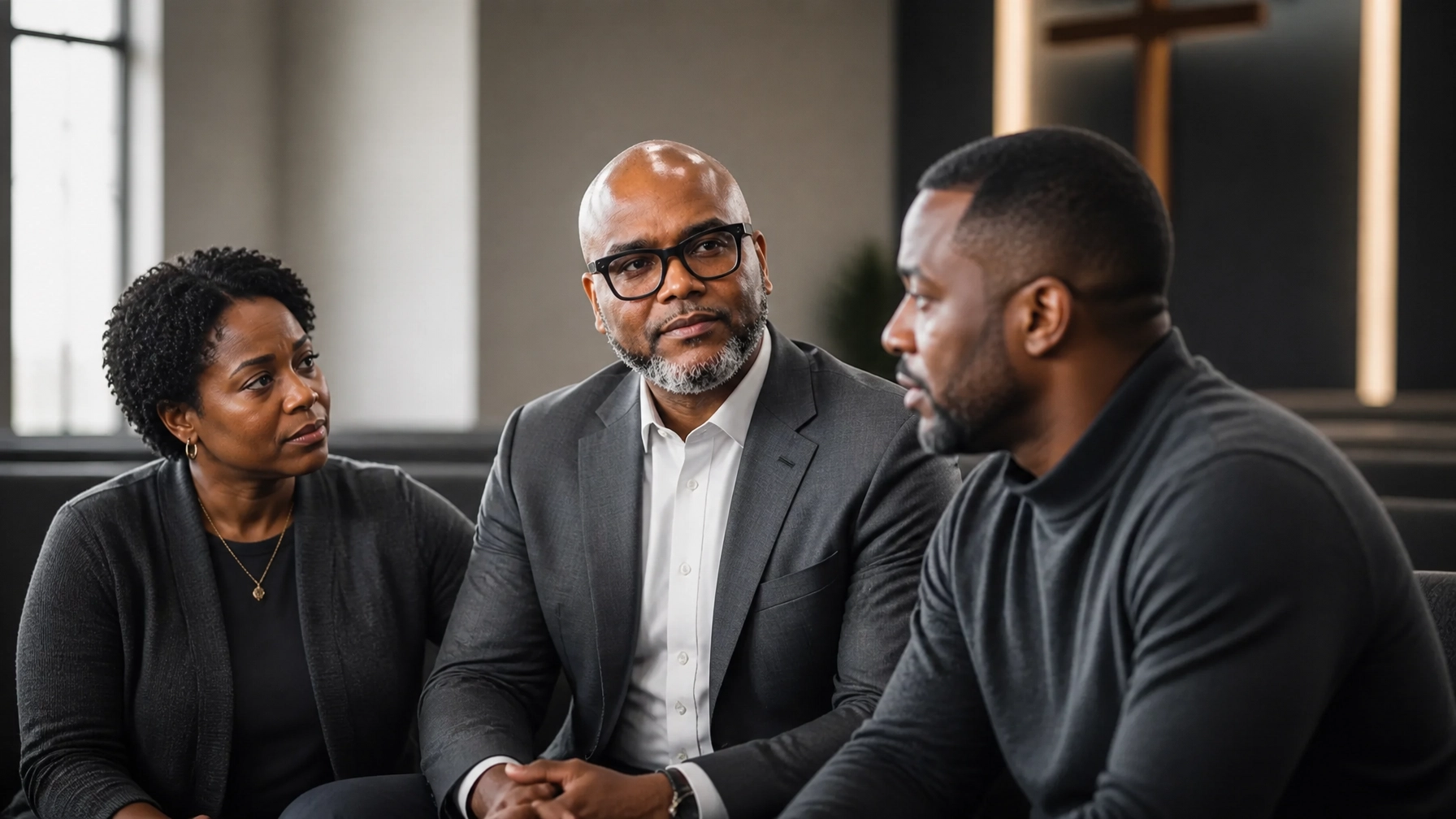
A listening circle can be simple. Meet monthly in a private room. Establish confidentiality. Do not require anyone to describe combat, trauma, or military service. Let participants speak about transition, family strain, health, employment, faith, or daily life.
The purpose is not to collect dramatic stories. It is to understand real needs.
A veteran sitting quietly in the pew may be managing hypervigilance, grief, chronic pain, insomnia, or a psychosomatic response to stress. Another may be carefully deciding whether church leaders will believe him when he describes racial bias. A spouse may be carrying the practical burden of appointments, finances, and emotional care.
The church must learn to see what is not announced.

Urban Christian Veterans has created space for these conversations through its work with Christian Veterans of Color. Churches can learn from those lived experiences by inviting veterans to shape the ministry rather than designing services for them without them.
Support begins with humility.
2. Train leaders to recognize PTSD and moral injury in the pew
Not every struggling veteran has PTSD. Not every veteran with PTSD will speak about it. Symptoms may appear as irritability, isolation, difficulty trusting others, sleep problems, emotional numbness, anger, substance use, or a constant need to sit where every entrance is visible.
These behaviors are not always rebellion or spiritual failure.
They may be attempts to remain safe.
Moral injury is another concern. The U.S. Department of Veterans Affairs explains moral injury as distress connected to witnessing, participating in, or failing to prevent actions that violate deeply held moral or spiritual beliefs. It can involve guilt, shame, grief, self-condemnation, anger, withdrawal, and a damaged sense of identity.
Moral injury is not simply “feeling bad about the past.” It can affect a person’s relationship with God, family, community, and self.
A veteran may still believe in God while feeling abandoned by God. He may pray faithfully while believing he is beyond forgiveness. She may attend worship while feeling separated from the congregation by experiences no one seems prepared to hear.
Pastors and lay leaders should receive basic training in:
- PTSD and trauma responses.
- Moral injury and spiritual distress.
- Suicide prevention and crisis response.
- Confidentiality and appropriate pastoral boundaries.
- Racial trauma and cultural humility.
- Referral practices for licensed mental health care.
Prayer is powerful. Prayer is not a substitute for competent treatment.
Churches should maintain a referral list that includes the VA, Vet Centers, licensed counselors, Christian therapists, crisis services, and culturally responsive providers. The VA’s Race, Culture, and PTSD resource also encourages Veterans to discuss cultural concerns with their providers and request care that feels respectful and appropriate.
A pastor does not need to become a therapist. A pastor does need to know when a veteran requires more than pastoral conversation.
3. Create peer-to-peer support for veterans and their families
Veterans often speak more openly with people who understand military culture without requiring an explanation for every term, memory, or reaction.
That is why peer-to-peer ministry matters.
A church can identify trusted veterans of color to serve as ministry leaders, mentors, visitation partners, and advocates. These leaders should not be expected to provide professional counseling. Their role is to build trust, notice changes, offer companionship, and connect people to appropriate resources.
A strong peer ministry might include:
- A monthly veterans and families gathering.
- One-to-one check-ins for newly separated service members.
- Mentoring for veterans navigating civilian employment.
- Family meals that include spouses and children.
- Transportation to appointments or church events.
- Support for older veterans who are isolated or homebound.
- A quiet place during worship for anyone who becomes overwhelmed.
- Conversations about faith after war, loss, and moral confusion.
Churches should also honor veterans who do not want public recognition. Some prefer not to stand during a service or wear a military organization’s emblem. Participation must remain voluntary.
This is not a public-relations ministry. It is a relationship ministry.
For generations, communities of color have relied on trusted networks when formal institutions were unreliable. A peer ministry can continue that tradition while also acknowledging the complexity of military service, racial identity, and Christian faith.
The veteran should not be reduced to a testimony. The family should not be treated as an accessory. Both deserve consistent care.
4. Help with VA benefits and health needs
Good intentions do not pay a medical bill, complete a disability claim, provide transportation, or explain a VA letter.
Practical assistance is one of the clearest answers to the question, how can churches support veterans?
A congregation can host a benefits navigation night with an accredited Veterans Service Officer. It can help veterans locate VA health care, understand eligibility, gather documents, and identify legitimate claims assistance. It can maintain an updated directory of local VA facilities, Vet Centers, housing resources, legal aid, employment services, and emergency support.
Volunteers should never promise a specific benefits outcome or give legal advice outside their training. Their role is to help veterans reach qualified professionals.
Health education also belongs in this ministry.
The VA reports that prostate cancer is one of the most common cancer diagnoses in the Veteran community. Approximately 10,000 cases are diagnosed across the VA each year, and about one-third occur among Black Veterans. Black men should speak with a health care provider about prostate cancer screening earlier than many other men; the VA encourages Black men to begin that conversation around age 40.
Churches can invite trusted clinicians, particularly clinicians who understand the communities they serve, to discuss:
- Prostate cancer awareness and screening conversations.
- Hypertension and diabetes.
- Toxic exposure concerns.
- Mental health and suicide prevention.
- Sexual health and family communication.
- Transportation and appointment support.
Use reliable information from the VA’s Prostate Cancer and the Black Veteran Community resource. Do not turn a health event into fear-based messaging. Give people clear information, time to ask questions, and help taking the next step.
Care for the body is not separate from care for the soul.

5. Address racial bias honestly and let Veterans of Color lead
A church cannot support Veterans of Color while refusing to discuss race.
Some Veterans of Color have experienced racial slurs, unequal discipline, exclusion from leadership, suspicion from law enforcement, or the assumption that they were support personnel rather than senior service members. Others have encountered bias after discharge when seeking employment, housing, medical care, or benefits.
These experiences can shape whether a veteran trusts church leadership.
A congregation does not need to defend every institution associated with military service. It needs to listen truthfully and respond with moral courage.
That may include:
- Teaching openly about race, service, and American history.
- Examining whether Veterans of Color are represented in ministry leadership.
- Asking whether worship language unintentionally glorifies war or silence.
- Partnering with culturally responsive mental health providers.
- Accompanying veterans to benefits, housing, or employment meetings.
- Responding when a veteran reports discrimination.
- Funding ministry work rather than relying only on volunteer labor.
- Inviting Veterans of Color to make decisions, not simply share stories.
The goal is not division. The goal is integrity.
Christian unity does not require pretending that everyone has experienced the church, military, or nation in the same way. Unity becomes more credible when it can hold truth, repentance, justice, and reconciliation together.
The church should be a place where a Veteran of Color does not have to choose between cultural dignity and spiritual belonging.
A 60-day starting plan for your congregation
Your church does not need to create a large organization immediately. Begin with disciplined action.
Days 1–30: Listen and assess
- Meet privately with veterans and family members.
- Identify barriers in worship, scheduling, transportation, and communication.
- Review confidentiality and crisis-response policies.
- Map local VA, Vet Center, health, counseling, and benefits resources.
- Ask Veterans of Color what leadership and representation should look like.
Days 31–60: Train and begin
- Form a diverse veteran ministry team.
- Provide basic trauma, moral injury, suicide prevention, and cultural humility training.
- Host one listening circle or benefits navigation event.
- Establish a confidential referral process.
- Gather feedback before expanding the program.
Do not measure success by attendance alone. Measure whether people feel heard, whether families receive practical help, whether leaders follow through, and whether Veterans of Color are trusted to lead.
A banner can announce welcome. Consistent action proves it.
The question is not whether your church appreciates veterans. The question is whether veterans can experience your congregation as a place of truth, safety, healing, and belonging.
That kind of church support veterans can trust requires courage. It requires preparation. It requires the willingness to hear difficult realities without abandoning hope.
If you are a Christian Veteran of Color, a family member, church leader, or active-duty service member searching for honest conversation about faith, race, military service, health, and healing, join the conversation at Urban Christian Veterans. Your experience matters. Your questions matter. Your peace is worth protecting.
Seeking help is not weakness.
It is wisdom. It is stewardship. It is honor.
Leave a Reply